
Carpet surface
Recent or limited contamination may be treatable when the source remains mainly in carpet face and backing.
Pet urine & persistent pet odor
Pet odor can move from carpet into pad, slab, subfloor, baseboards and adjacent materials. SDM follows the contamination pathway before deciding what to clean, treat, remove or seal.
Where pet contamination can travel
Recent or limited contamination may be treatable when the source remains mainly in carpet face and backing.
Repeated events can bypass surface-only cleaning. Affected pad or tack strip may require direct treatment or removal.
When contamination reaches porous concrete or wood subfloor, the scope shifts toward direct source access, cleaning, treatment, drying and possible sealing or replacement.
Real SDM field evidence
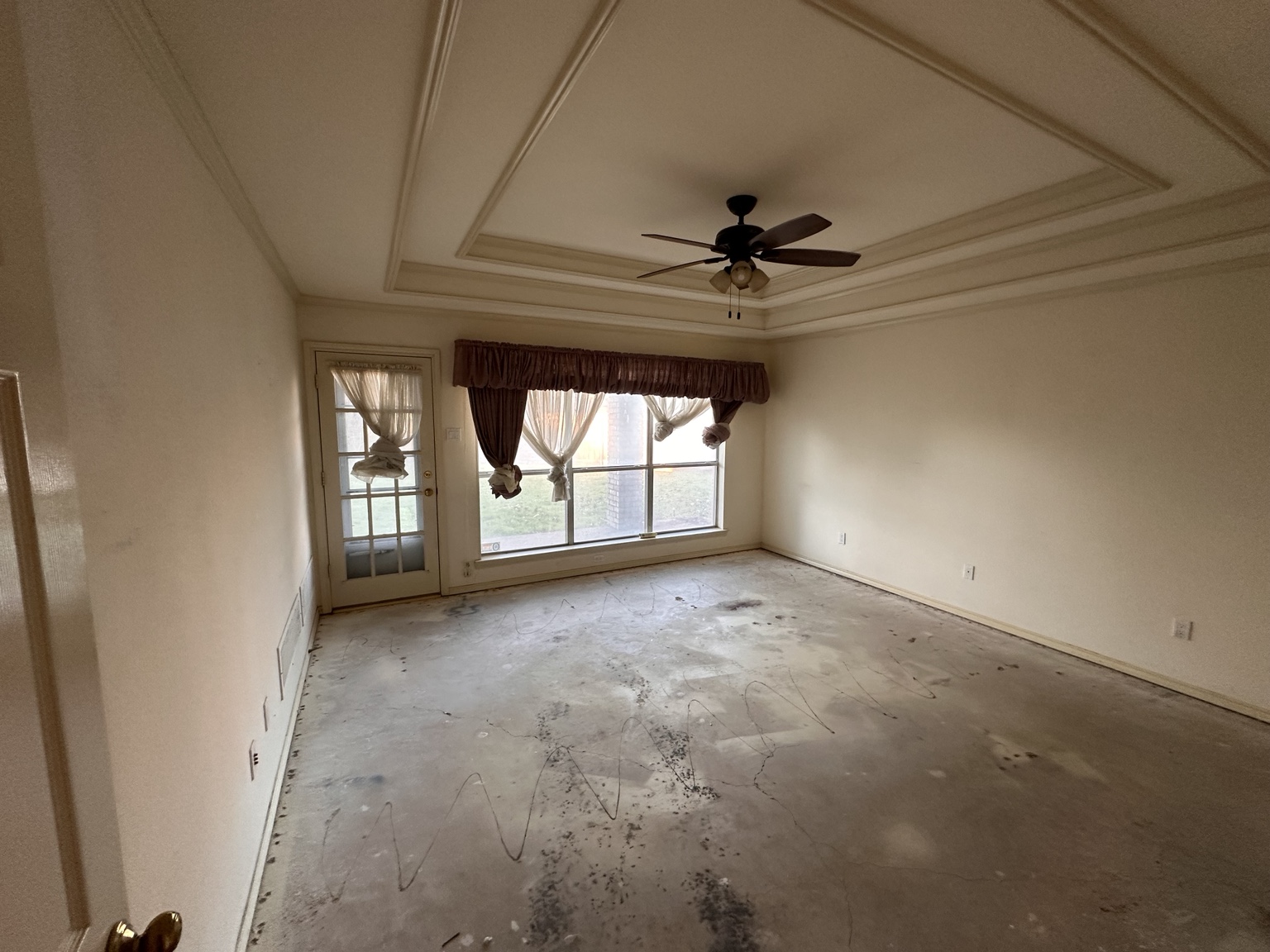
The family reported prolonged pet contamination before the home was prepared for sale. SDM removed carpet and pad, exposed downstairs slab treatment areas, treated the upstairs subfloor, cleaned selected wall areas and used supplemental odor-control equipment after source work.
The case separates what photographs visibly establish from reported project history and customer outcome.
SDM pet-odor sequence
Identify odor concentration, visible staining and likely affected flooring or vertical surfaces.
Remove abandoned pet waste and disposable reservoirs when warranted.
Treat pad/subfloor directly or remove affected materials when evidence shows contamination below the face fiber.
After materials dry, determine whether residual odor justifies sealing, removal or further treatment.
DFW pet-odor planning ranges
One or a few localized areas with no evidence contamination broadly reached pad, subfloor or wall assemblies.
Multiple rooms or repeated accidents requiring pet-specific chemistry, deeper treatment, cleaning and whole-unit odor support.
Widespread contamination, pad/subfloor involvement, vertical marking or staged treatment and reassessment.
Carpet/pad removal, subfloor sealing or replacement, baseboard/drywall work, flooring replacement or other material recovery is necessary.
Planning ranges, not a property-specific quote. Actual scope depends on observed conditions, materials, access and treatment response.
Real customer · real result
The review describes carpet and pad removal, multiple treatments to the downstairs slab and upstairs subfloor, additional wall-area cleaning and several machines used to support odor removal before the property was sold.
This is customer-perspective proof from one completed project, not a universal promise. Severe pet-odor results depend on whether the actual reservoirs can be reached and corrected.