SDM Intelligence
One incident system for water, fire, smoke, soot and odor.
Start with the incident type. SDM Intelligence routes the situation through domain-specific questions while keeping the same source-first safety, evidence, uncertainty, documentation and professional-boundary rules.
Incident Builder
What type of incident are you dealing with?
Choose the closest starting point. Each path asks different questions because water migration, fire damage, smoke residues, and persistent odor require different evidence and different safety boundaries.
WaterActive leaks, flooding, sewage, wet ceilings, affected assemblies, contamination, drying and monitoring.Start Water Incident Builder →FireRe-entry status, structural indicators, utilities, suppression water, debris, stabilization and professional escalation.Start Fire Incident Builder →Smoke & SootResidue type, pressure pathways, HVAC migration, contents, cross-contamination, cleaning and verification.Start Smoke / Soot Incident Builder →OdorSource identification, porous reservoirs, HVAC pathways, treatment history, recurrence and post-remediation verification.Start Odor Incident Builder →
One reasoning standardSource first · facts vs. interpretation · uncertainty stated · professional boundaries preserved
Explore the Technical Authority Library →Knowledge System Growth
The foundation is becoming deeper and more specific.
The current totals include the interactive Water, Fire, Smoke/Soot, and Odor logic plus the Fire & Smoke Knowledge Layer, material diagnostics, commercial pathways, case-evidence framework, and dedicated fire/smoke guides. These counts reflect the knowledge structures, decision logic, guided outcomes, and property profiles currently implemented across SDM Intelligence.
296Structured knowledge records
572Decision rules
193Generated plan outcomes
26Dedicated action guides
14Property profiles
0Hidden data transmissions
Specialized Water Action Guides
Water-specific guides remain available when the incident is a water loss.
These established water guides are preserved; fire, smoke/soot and odor incidents should begin in their dedicated Incident Builder paths above.
Burst Pipe Guided Action Plan
Stopping the water matters first, but the loss is not over until affected materials and concealed migration are evaluated.
Open guide →Wet Ceiling Guided Action Plan
The visible stain may be smaller than the affected assembly, and saturated drywall can lose strength.
Open guide →Contaminated Water Guided Action Plan
Contact avoidance, contamination control, material removal, cleaning, and drying must be considered in the correct order.
Open guide →Wet Flooring Guided Action Plan
Hardwood may sometimes be dried, laminate often swells, carpet depends on source and exposure, and every system can hide moisture below the surface.
Open guide →Recovery Documentation After Water Damage
Mitigation documents and controls damage. An insurance carrier or other authorized claim professional makes coverage and payment decisions.
Open guide →Can Water Damage Wait Until Morning?
Some controlled losses may have lower immediate urgency, but active flow, unstable ceilings, electrical involvement, contaminated water, or continuing migration should not wait.
Open guide →Water Heater Failure Action Guide
Attic, closet, garage, and utility-room failures can move water into ceilings, insulation, walls, flooring, contents, and lower levels.
Open guide →Appliance Leak Action Guide
Dishwashers, washing machines, refrigerators, ice-maker lines, and disposal connections can wet subfloors, cabinets, walls, and adjacent rooms.
Open guide →Roof and Storm Intrusion Action Guide
Storm openings, roof failures, wind-driven rain, and temporary protection all affect the correct sequence of mitigation.
Open guide →Commercial Water Loss Action Guide
Offices, retail, restaurants, medical spaces, warehouses, and industrial facilities require different continuity and access plans.
Open guide →Multifamily Water Loss Action Guide
The source unit, adjoining walls, lower units, corridors, shared chases, and common systems may all require evaluation.
Open guide →Mold Risk After Water Damage
Risk depends on moisture duration, temperature, material type, contamination, ventilation, and concealed wet areas.
Open guide →The SDM Intelligence Standard
A useful answer should identify the priority, the action, the reason, and the limit.
Every plan separates what to do, what to avoid, what the recommendation is based on, and when human escalation is appropriate.
PriorityWhat matters first.
ActionWhat the person can safely do next.
BasisWhy the guidance is reasonable.
LimitWhat the digital system cannot determine.
Trusted Help Beyond DFW
When professional help is needed, the recommendation should deserve your trust.
SDM Intelligence is building a vetted Trusted Partner Network. Referral fees are not required, and no company is recommended simply because it paid for placement.
Trusted Partner AvailableA vetted company currently meets the standards.
Evaluation in ProgressNo recommendation is made before review is complete.
No Trusted Partner YetThe platform says so explicitly and provides objective selection guidance.
Transparent Decision Support
Build a transparent incident assessment—not just a generic action plan.
The Incident Builder asks adaptive questions, explains why each answer matters, displays risk categories, and creates a portable incident notebook.
Start Incident BuilderAdaptive questionsProperty, source, timing, hazards, materials, and occupancy.
Visible reasoningSee the facts used to reach the conclusion.
Confidence statementsUnderstand what remains uncertain.
Incident notebookSave, copy, share, or print the result.
Recovery Documentation & Claim Process
The property loss and the claim-and-recovery record are related—but they are not the same problem.
Learn what to expect from first notice through mitigation, inspections, initial documentation, reconstruction, repair coordination, and open property-recovery questions, and final reconciliation.
Open the Recovery Documentation GuideWhat determines coverage and payment?Understand policy-specific factors without predicting an outcome.
How long will it take?Review common stages and Texas deadlines.
Mitigation or repairs?See why they are evaluated separately.
What should I document?Build a stronger recovery documentation file.
Property Recovery Notebook
One local record from first discovery through final repairs.
Separate reported facts from inferences and unknowns, organize incident record and repair details, and generate role-specific summaries without creating a cloud account.
Open Recovery NotebookSingle-incident memorySaved locally in the browser.
Transparent confidenceReported, inferred, unknown, and confidence labels.
Documentation and repair trackingincident record, contacts, estimates, documentation, and open issues.
Structured outputsOwner, contractor, reviewer, property manager, and complete report.
Reasoning Engine
Inspect the facts, interpretations, unknowns, and confidence behind the output.
SDM Intelligence now separates what the visitor reported from what the system is interpreting, shows what normally happens next, and presents possible options with advantages and disadvantages.
Open Reasoning EngineReported FactsOnly information directly entered by the visitor.
Possible InterpretationsClearly identified inferences.
Explain WhyFacts, unknowns, industry reasoning, and confidence.
Possible OptionsAdvantages and disadvantages without directive advice.
Adaptive Intelligence
The next question now changes with the answers already provided.
SDM Intelligence can branch by source, origin location, migration, materials, property use, incident record status, and the visitor's primary concern before generating a transparent reasoning report.
Start Adaptive AssessmentContext-dependent pathWater heater, roof, sewage, and other incidents branch differently.
Material-specific reasoningWood flooring, drywall, insulation, cabinetry, and contents change the output.
Occupancy awarenessResidential, multifamily, commercial, medical, and industrial contexts differ.
Transparent reportFacts, interpretations, unknowns, process context, options, and confidence.
Recovery Process Intelligence
Understand the claim and recovery process without pretending to predict the outcome.
Prepare factual loss documentation and understand the initial steps through claim opening. Coverage and claim advocacy are intentionally outside SDM Intelligence.
Open Process Navigator12 recovery stagesDiscovery through reconciliation.
25 termsPlain-language definitions and boundaries.
12 documentation typesRecords commonly created during recovery.
85 structured recordsProcess, terminology, and documentation intelligence.
Building Science Expansion
Understand migration, materials, drying, and reconstruction as connected systems.
SDM Intelligence now includes 12 material profiles, 12 migration paths, 12 drying principles, 12 reconstruction stages, and 84 structured building-science records.
Open Building ScienceMaterial behaviorAssembly-specific unknowns and possible options.
Water migrationVisible and concealed pathways.
Drying scienceExtraction, evaporation, dehumidification, airflow, and verification.
Reconstruction sequencingCommon stages after stabilization.
Property Recovery Knowledge
See how the property, incident, people, and operations change the recovery.
SDM Intelligence now includes 11 property types, 9 incident scenarios, 27 possible recovery paths, 13 stakeholder roles, 12 decision points, and 96 structured recovery records.
Open Property Recovery KnowledgeProperty contextResidential, multifamily, commercial, medical, hospitality, and industrial.
Incident scenariosPipe, water heater, sewage, roof, flood, HVAC, suppression, and more.
Possible recovery pathsBranches, conditions, and hidden concerns.
Stakeholder coordinationRoles, authority, responsibilities, and common decision points.
Unified Recovery Record
One evolving record now connects SDM Intelligence.
Adaptive Intelligence, the Reasoning Engine, Recovery Notebook, recovery-documentation tools, Building Science, Property Recovery knowledge, and Trusted Partner preferences can now work from one local recovery context.
Open Recovery RecordEnter onceReuse context across modules.
Living timelineKeep events together.
Visible memory historySee module updates.
Local by defaultNo cloud account or hidden submission.
Source-First Intelligence
Verify the authority behind the answer.
Sources appear first. Source-supported facts and SDM Intelligence interpretation are separated. Every substantive output ends with direct links to the supporting material.
Open Source-First IntelligenceAuthority and jurisdictionSee who issued the source and where it applies.
Source statusCurrent, review due, superseded, or unavailable.
Proposition mappingTrace factual statements to exact supporting sources.
Direct linksEvery substantive response ends with verification links.
Active Property Damage?
Use the knowledge system—but do not delay emergency or qualified human help when water, fire, smoke, odor, structural, electrical, gas, or other active hazards are present.
Start Here
You do not need to choose an engine.
Start by telling SDM Intelligence what happened. The assessment, reasoning, sources, Recovery Record, and next-stage information work together behind the experience.
Technical Authority Library
Go deeper with source-first guidance across the full service spectrum.
The Authority Library now preserves the original water guidance and adds dedicated technical libraries for fire, smoke/soot and odor.
Incident Scope & Technical Tools
Use the tool that matches the incident.
Water Incident Scope Intelligence
Build a transparent preliminary water-mitigation scope using affected area, materials, containment, equipment, labor, monitoring and editable assumptions.
Open Water Scope Intelligence →Fire Incident Reasoning
Organize entry safety, structural indicators, utilities, suppression water, debris and stabilization before deeper recovery decisions.
Open Fire Incident Builder →Smoke & Soot Reasoning
Trace residues, migration pathways, HVAC involvement, contents and cleaning-verification questions.
Open Smoke / Soot Builder →Odor Source Reasoning
Organize source identification, porous reservoirs, pathways, prior treatments, recurrence and verification.
Open Odor Incident Builder →Structural Drying Intelligence
Explore equipment families, assembly-specific drying methods, psychrometrics, moisture mapping, monitoring, stalled-drying diagnostics, and regional drying context.
New Intelligence Domain
Fire & Smoke Intelligence
Reason across heat damage, smoke and soot migration, firefighting water, cleaning, odor and structural drying as one incident.
Open Fire & Smoke IntelligenceFirst-Party Field Evidence
See how the investigation actually looks in the field.
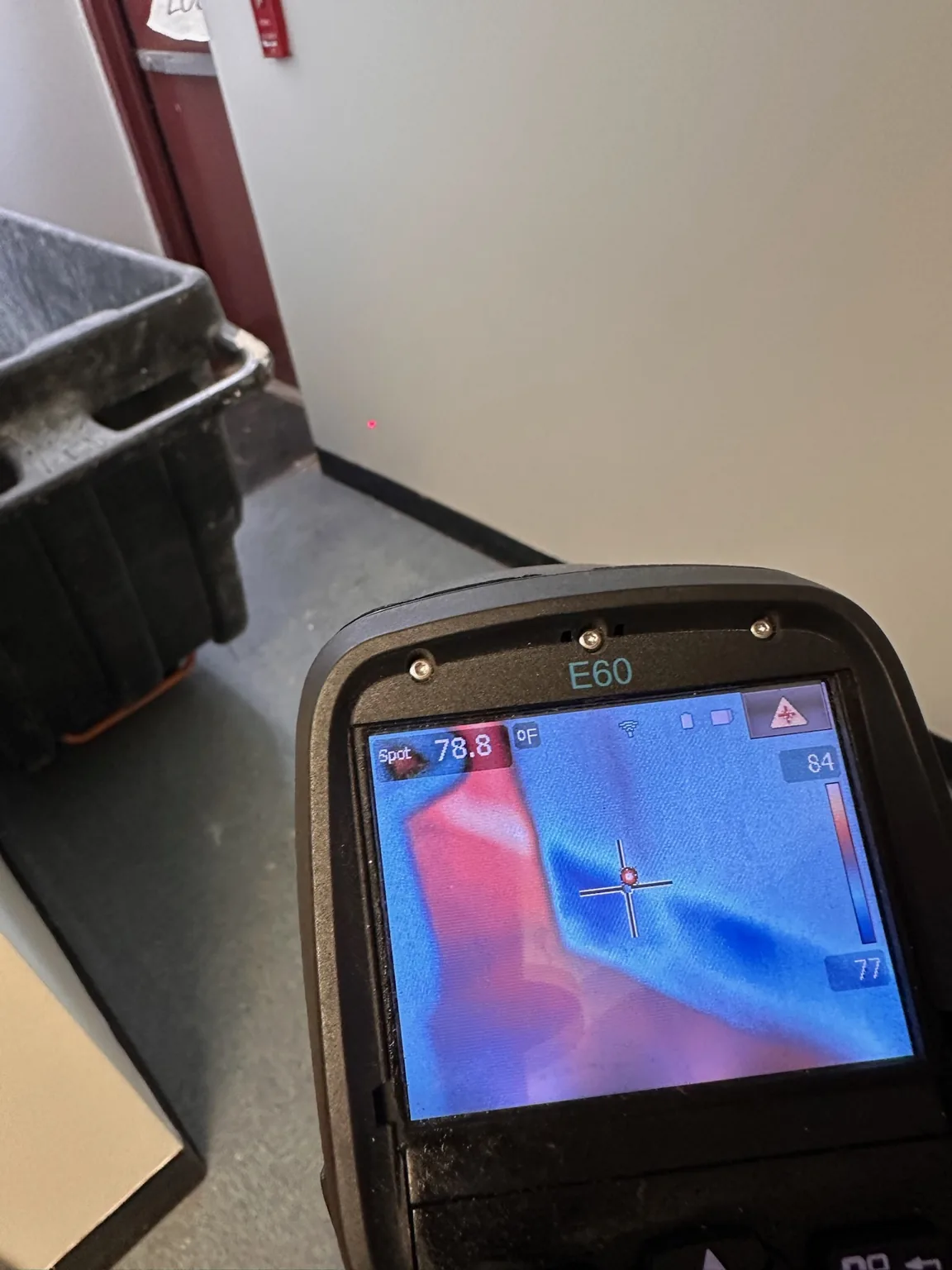
SDM Field Case 001 connects thermal screening, comparative moisture measurements, selective demolition, exposed commercial assemblies and psychrometric monitoring into one documented evidence chain.
The photographs are not used to claim more than they establish. Thermal images are described as temperature anomalies unless moisture is independently corroborated.
Fire & Smoke
Verification & Outcome Intelligence
Separate stable improvement from incomplete evidence, unresolved reservoirs, pathway recurrence, recontamination and reconstruction hold points.
Explore verification outcomes →Fire + Water
Unified Suppression-Water Intelligence
Connect smoke, soot and heat observations with water migration, wet assemblies, drying status and dual verification before reconstruction.
Explore mixed-hazard reasoning →