DFW property manager resources
Property Manager Resource Center
Coordinate an active loss, document a turnover concern, and keep authorization, access and updates clear across units and common areas. Free resources; no registration required.
Emergency Mitigation Checklist
First 15 minutes, first hour and first day: safety, source control, photos, affected areas, resident coordination and escalation.
Open checklistProperty Turnover Odor Assessment Checklist
Capture odor source history, strongest areas, materials, HVAC behavior, prior cleaning and the final reassessment.
Open checklist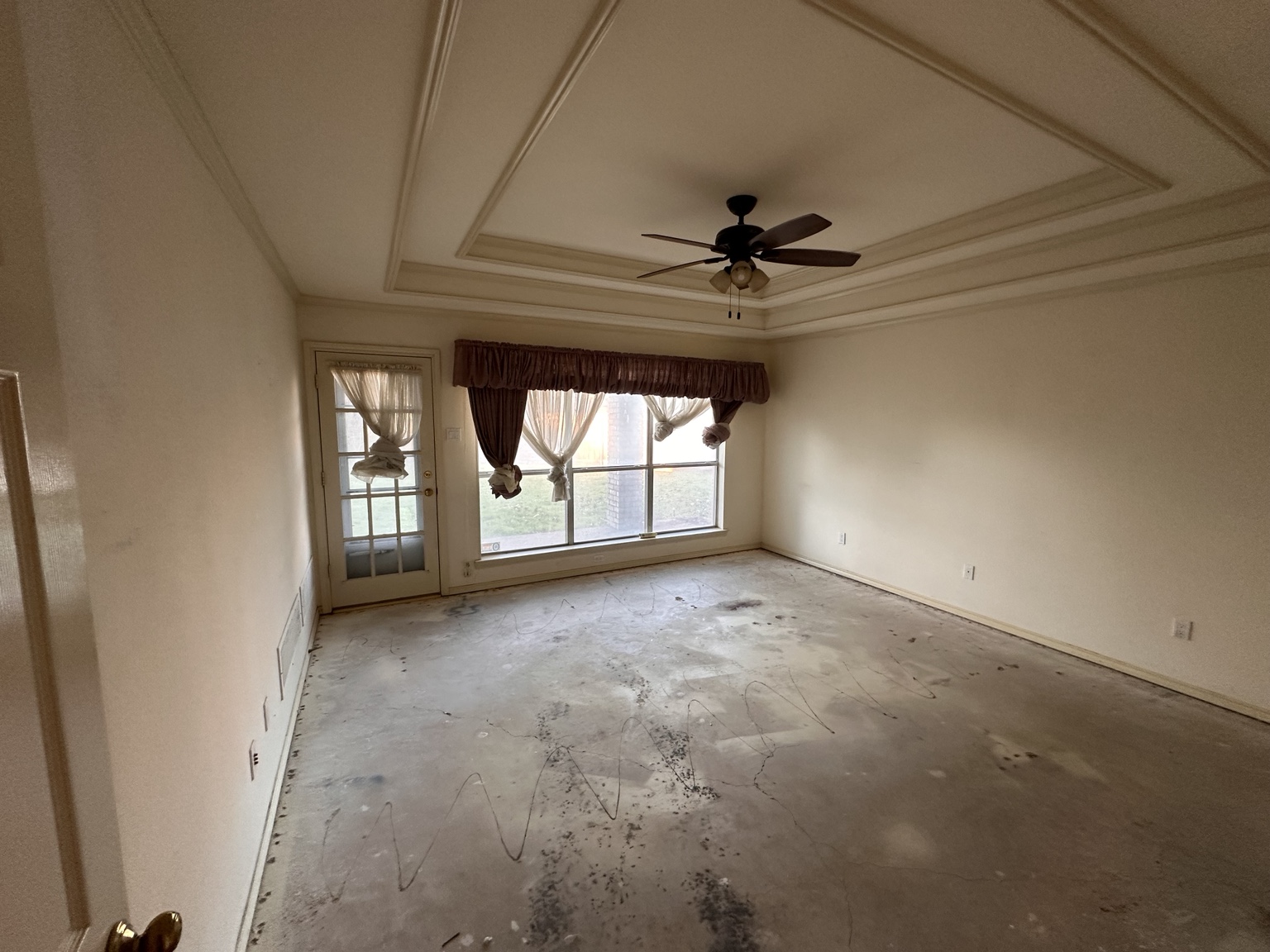
Property-turnover proof
When ordinary cleaning is not enough, the contaminated material has to be reached.
Field Case 004 documents a Plano home prepared for sale after prolonged pet contamination. Carpet and pad were removed, downstairs slab areas were treated directly, the upstairs subfloor received treatment and selected wall areas were cleaned.
“They didn't use perfume, they actually removed the odor itself! Amazing!”
— Ginger S., Yelp, Sept. 26, 2026
Operational takeaway
Escalate from ordinary turn cleaning when the reservoir is deeper than the surface.
Odor returns after cleaning
Repeated cleaning or fragrance may change perception temporarily while pad, slab, subfloor or wall-edge reservoirs remain.
Flooring is already coming out
Use the exposed condition to evaluate whether subfloor, slab, tack strip or adjacent assemblies need direct treatment.
Turn timing matters
Resolve the source before final paint, flooring and lease-up so later work does not conceal the condition before it is understood.
Print and complete offline
Water incident and multi-unit coordination worksheet
No online entry or automatic storage. Use unit or area labels rather than unnecessary resident names. Keep contact information in your normal secure management system.
1. Report what is known
Report date/time and time first noticed:
Building / unit or common-area labels:
Observed conditions and whether water is still entering (or unknown):
Areas above, below or adjoining that need assessment:
Safety concerns reported / facts still unconfirmed:
Separate what someone observed from a suspected source. Record safe photo references, not sensitive tenant or medical details.
2. Confirm authorization and access
Role authorized to approve work / agreed scope reference:
Site contact role / secure contact-record reference:
Access arrangements, restrictions and agreed visit window:
Occupied / vacant / unknown areas and coordination needs:
Confirm who can authorize work and how changes will be documented under the written work authorization. Do not assume permission to enter another unit.
3. Assign updates and next steps
Person or role responsible for building-wide updates:
Contractor / management / resident communication responsibilities:
Next update time and next assessment or visit:
Open decisions, responsible role and target response time:
Document impacts to shared areas and coordination across units without making a habitability or legal determination. Escalate those questions to the appropriate qualified professional or authority.
Unit and common-area tracking
Print one block for each affected or potentially affected area. Use area labels and staff roles, not resident names, medical details or sensitive incident narratives. An adjoining area listed for assessment is not confirmed damaged.
Area record 1
Unit / common-area label and relationship to reported area:
Observed condition / reported by role / date and time / unknowns:
Occupied, vacant or unknown / access restrictions:
Authorized decision-maker role / scope or permission reference:
Notification assigned to / contact-record reference / status and time:
Access confirmed by / agreed visit window / escort or key arrangements:
Assessment or work status / next action / responsible role / update time:
Area record 2
Unit / common-area label and relationship to reported area:
Observed condition / reported by role / date and time / unknowns:
Occupied, vacant or unknown / access restrictions:
Authorized decision-maker role / scope or permission reference:
Notification assigned to / contact-record reference / status and time:
Access confirmed by / agreed visit window / escort or key arrangements:
Assessment or work status / next action / responsible role / update time:
Area record 3
Unit / common-area label and relationship to reported area:
Observed condition / reported by role / date and time / unknowns:
Occupied, vacant or unknown / access restrictions:
Authorized decision-maker role / scope or permission reference:
Notification assigned to / contact-record reference / status and time:
Access confirmed by / agreed visit window / escort or key arrangements:
Assessment or work status / next action / responsible role / update time:
Coordinate notification, access and authority
- Address immediate danger first. Use emergency services when appropriate; do not enter unsafe areas to complete the record.
- Identify the affected and adjoining area labels. Separate confirmed observations from areas that still need assessment, including common areas and units above or below.
- Identify who may authorize each scope and access. Record the existing authorization reference and unresolved questions. Do not assume one unit's authorization permits entry into another.
- Assign required communications through management's established process. Record who will contact the appropriate occupants or site contacts, the status and the next update. This worksheet does not determine notice requirements, entry rights or habitability.
- Confirm the visit and access arrangements. Communicate the agreed areas, restrictions, site contact and access status to the contractor; do not describe access as confirmed until it is.
- Track each area's outcome and next decision. Share only the relevant operational information with authorized recipients. Record scope changes under the written work authorization and hand off unresolved access or legal questions to the appropriate responsible party.
Questions for a prospective vendor
- What conditions have been observed, and what still needs assessment?
- What work, areas and materials are included or excluded from the written scope?
- What access is needed, who may authorize it, and how will occupied areas be coordinated?
- What monitoring or progress records fit this service, and who receives updates?
- How are changes, equipment visits, quantities and completion criteria documented?
- Which tasks require separately qualified trades, assessment or clearance?
Evaluate relevant qualifications and written terms for the actual work. This checklist does not certify a vendor or replace your organization's procurement requirements.
Turnover and tenant/occupancy documentation
Use the preserved turnover odor checklist for noninvasive observations, material history and prior cleaning. Record occupancy status, access constraints and communication responsibilities; avoid personal incident narratives or medical information. A smell or a photograph alone does not establish a source or clearance.
More documentation guidance · Water monitoring FAQs · Optional request for service
Planning worksheet reviewed October 31, 2026. Operational documentation only; not legal, insurance or occupancy advice.